

How to Tell If Your Roof Needs Replacement: 8 Signs
Table of Contents
How to Tell If Your Roof Needs Replacement: The Signs That Matter
1. Curling, Buckling, Cracked, or Missing Shingles
2. Granule Loss and Granules in Gutters
3. Roof Leaks, Ceiling Stains, and Attic Warning Signs
4. Moss, Mold, Algae Growth, and Damaged Flashing
5. Sagging, Structural Problems, and Storm Damage
6. How Long Does a Roof Last? Age and Material Lifespan
7. Roof Replacement vs. Repair: A Decision Framework
What a Professional Roof Inspection Includes
Frequently Asked Questions
Last Updated: October 4, 2026
How to Tell If Your Roof Needs Replacement: The Signs That Matter
Knowing how to tell if roof needs replacement starts with a simple idea: your roof rarely fails without warning. Most roofs give clear signals months before they leak. This guide covers the eight warning signs that matter most, from curling shingles to sagging decks. We also explain when a repair is enough and when you need a full roof replacement.
A roof replacement is the full removal and rebuild of your roof covering, underlayment, and sometimes the decking beneath. A repair fixes one damaged area. The difference matters because patching a roof that's already at the end of its service life just delays the inevitable.
Below, we'll show you exactly what to look for, where to look, and how to decide. The signs fall into two groups: what you can see from the ground, and what shows up inside your home. Start with the outside.
1. Curling, Buckling, Cracked, or Missing Shingles
Curling, buckling, cracked, or missing shingles are the clearest sign your roof covering is failing. Shingles curl at the edges when they lose flexibility. They buckle in wavy ridges when moisture gets trapped underneath. Both mean the roof covering can no longer shed water the way it should.
Walk your yard and look up. Check for:
Shingles with edges that lift or curl upward
Wavy, rippled rows across the roof surface
Cracks or splits in individual shingles
Bald spots where shingles have blown off

Missing shingles expose the underlayment and decking to rain and sun. Once water reaches the roof decking, rot can start. A common mistake is replacing a few missing shingles and calling it done. If the surrounding shingles are also curling, the whole roof covering is near the end of its life.
2. Granule Loss and Granules in Gutters
Granule loss is one of the easiest signs to check, and most homeowners miss it. Asphalt shingles are coated with mineral granules that protect the asphalt from sunlight. When those granules wash away, the shingle dries out, cracks, and fails.
Here's how to check:
Look inside your gutters after a rain.
Run your hand along the bottom.
If you find a gritty, sand-like buildup, that's granule loss.
Some granule shedding is normal on a new roof. Heavy loss on an older roof is not. You may also see dark, bare patches on the shingles themselves where the granules are gone.
Pro Tip Check your downspout splash areas too. Granules collect there after heavy rain, and it's often easier to spot the buildup on the ground than up on the roof.
3. Roof Leaks, Ceiling Stains, and Attic Warning Signs
Interior clues often show up before you notice anything wrong outside. Water stains on ceilings or walls, peeling paint, and a musty smell in the attic all point to water intrusion. By the time a stain appears, water has usually been getting in for a while.
Get into your attic with a flashlight. Look for:
Dark streaks or stains on the roof decking
Damp or matted insulation
Daylight showing through the roof boards
A musty, damp smell
A roof leak doesn't always drip straight down. Water can travel along rafters and show up far from the actual breach. That's why a ceiling stain in one room can trace back to damage in a completely different spot. If you find stains, don't just paint over them. Find the source.
4. Moss, Mold, Algae Growth, and Damaged Flashing
Moss, mold, and algae growth all signal trapped moisture, and damaged flashing is a leading cause of leaks. Moss holds water against the shingles and slowly lifts their edges. Algae leaves dark streaks that look like dirt but signal a moist surface. Flashing is the metal that seals joints around chimneys, vents, and valleys.
Check these spots:
Shady roof slopes where moss tends to grow
Dark green or black streaks running down the roof
Rusted or pulled-away metal around chimneys and vents
Cracked sealant at roof joints
Damaged flashing is easy to overlook because it's small. But it's one of the most common leak points on any roof. If the flashing is failing and the surrounding shingles are worn, a repair rarely holds for long.
5. Sagging, Structural Problems, and Storm Damage
A sagging roof is a structural problem, not a cosmetic one, and it needs attention fast. Sagging shows up as a dip or curve in the roofline. It usually means the roof decking or the framing beneath it has been weakened by long-term water damage.
Look for:
A visible dip or sway in the roof line
Cracks in the ceiling or walls near the roofline
Doors or windows that suddenly stick
Soft spots in the roof deck
Storm damage speeds all of this up. Hail damage leaves dents and bruises that knock granules loose. Wind damage tears off shingles and lifts edges. A fallen tree can crack the decking outright. After any major storm, have the roof checked, even if you don't see obvious damage.
Watch Out Never walk on a sagging roof. The decking may not hold your weight, and a fall from roof height is a serious injury. Inspect from the ground or from inside the attic instead.
6. How Long Does a Roof Last? Age and Material Lifespan
How long does a roof last depends on the material, the climate, the pitch, the ventilation, and how well it's been maintained. Age alone doesn't mean you need a new roof, but it sets your expectations and tells you how much weight to give the other warning signs. A 22-year-old asphalt roof with one lifted shingle is a very different situation than a 22-year-old asphalt roof with granule loss, a ceiling stain, and soft decking.
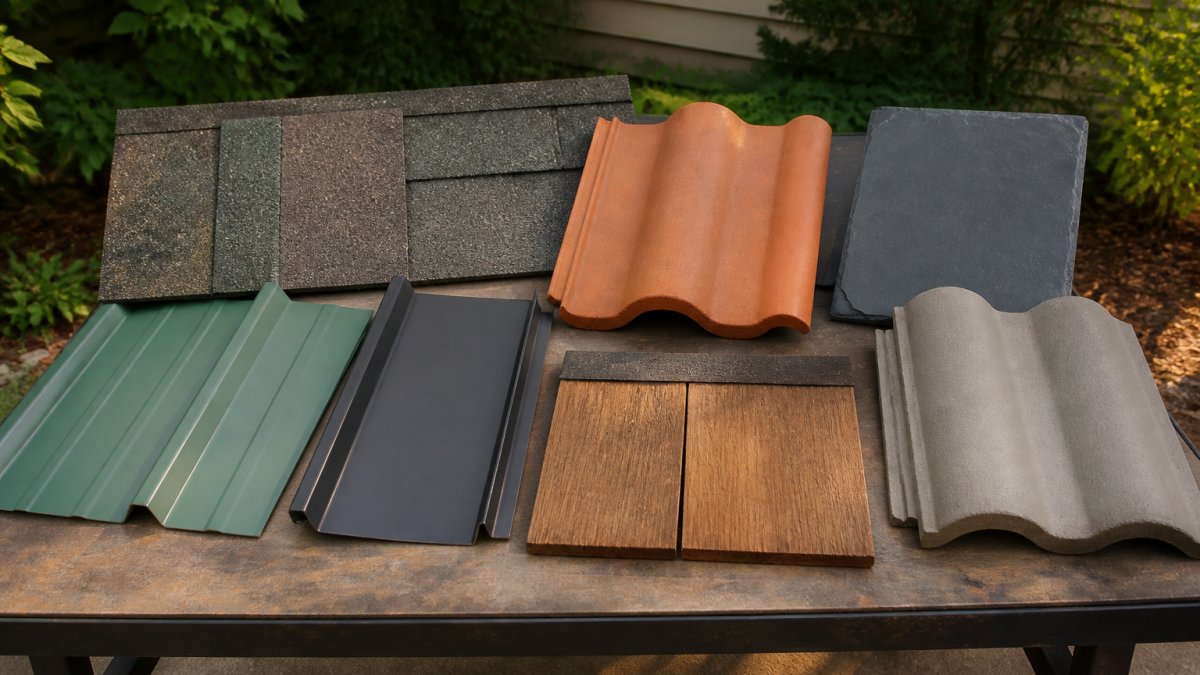
Here's a general guide to service life by material, along with the specific end-of-life signs that matter for each one.
Roof Material | Typical Service Life | What End-of-Life Actually Looks Like |
3-tab asphalt shingles | 15-20 years | Curling edges, heavy granule loss, bald patches where the asphalt mat shows through |
Architectural (dimensional) shingles | 25-30 years | Cracking, missing tabs, exposed nail heads, leaks at valleys and penetrations |
Metal (standing seam, corrugated) | 40-70 years | Loose or backed-out fasteners, surface rust, chalking or fading finish, sealant failure at seams |
Wood shakes and shingles | 20-30 years | Splitting, cupping, rot at the butt ends, moss growth that holds moisture against the wood |
Clay and concrete tile | 50+ years | Cracked or slipped tiles, failed underlayment (the tiles outlast the underlayment by decades) |
Slate | 75-100 years | Cracked or slipping slates, corroded or failed flashing, deteriorated underlayment |
Two things this table doesn't capture. First, the underlayment often fails before the visible covering, especially on tile and slate roofs where the top layer can look fine while water is already getting past it. Second, climate and ventilation matter as much as material. A roof over a poorly ventilated attic in a hot, humid climate ages faster than the same roof over a well-ventilated attic in a mild one.
A roof at the end of its service life usually shows several signs at once, not just one. If your asphalt roof is 20 years old and you're seeing curling, granule loss, and a leak, replacement is the smarter call. If it's 10 years old with one cracked shingle, repair it. The age number is a tiebreaker, not a verdict.
Pro Tip Write the installation year on a rafter in the attic if you don't have the original paperwork. Future you, or a future inspector, will thank you.
7. Roof Replacement vs. Repair: A Decision Framework
Roof replacement vs. repair comes down to four things: the age of the roof, how much of it is affected, whether the damage is structural or cosmetic, and how many times you've already patched it. Use this framework to decide.
Choose repair when:
The roof is under 15 years old and still within its expected service life
Damage is limited to one small area, a single flashing detail, one vent boot, a few shingles
The problem traces to a single identifiable cause, like a failed pipe boot or a nail pop
The rest of the roof covering is in good shape with no widespread granule loss or curling
You haven't repaired this same area before
Choose roof replacement when:
The roof is past its expected service life for its material
Damage covers more than roughly 30% of the roof surface
You're seeing leaks in multiple spots, especially far apart from each other
The decking or framing is affected, soft spots, sagging, or daylight visible through the boards
You've repaired the same area more than once
The underlayment has failed, even if the top covering looks intact
A few practical rules of thumb that experienced roofers use. If a repair would cost more than about a third of what a replacement would cost, replacement usually wins on value. If the roof is already in its final quarter of expected service life, a repair is often money spent to delay the inevitable. And if the same leak keeps coming back after two repairs, the problem is usually bigger than the spot you're patching.
A roof inspection checklist helps here. Check the shingles, the granules, the attic, the flashing, and the age. If three or more categories show problems, replacement is usually the better investment. If only one does, a targeted repair is often enough.
Key Takeaway Patching a roof that's already past its service life rarely pays off. You'll spend money on repairs and still face a replacement within a year or two.
What a Professional Roof Inspection Includes
A professional assessment goes further than what you can see from the ground. A trained inspector checks the roof covering, the underlayment, the flashing, the decking, and the attic. They look for water intrusion, ventilation problems, and structural issues.
If you're dealing with storm damage, document everything before repairs start. Take photos, keep receipts, and check your homeowner's policy. Many policies have deadlines for filing storm-damage claims.
For homeowners across South-East Pennsylvania, Xperienced offers roof assessments. As a veteran-owned company, we handle roof replacements with quick 1-2 day installations and strong warranties. We also offer financing for homeowners who need it. If your roof shows several of the signs above, get a professional opinion before the next storm.
Frequently Asked Questions
What are five signs that my roof needs to be replaced?
Watch for curling, buckling, or missing shingles; granules collecting in gutters; water stains on ceilings or walls; moss, mold, or algae growth; and sagging or soft spots on the roof deck. Any one of these points to roof deterioration, and two or more together usually mean replacement is the smarter call. When in doubt, schedule a professional assessment before the next storm season.
Does a 20-year-old roof need to be replaced?
Not automatically. A 20-year-old asphalt shingle roof is near the end of its typical service life, but condition matters more than age. If your roof is 20 years old and shows curling shingles, granule loss, or interior water damage, replacement is likely. If it is intact and you have kept up with maintenance, a professional inspection can confirm whether it has a few years left.
How can I tell if my roof needs repair or full replacement?
Use three filters: age, extent, and cost. A single damaged flashing or a few cracked shingles on a roof under 15 years old usually means repair. Widespread granule loss, leaks in multiple spots, or damage across more than 25 to 30 percent of the roof covering usually means replacement. If repair costs approach half the price of a new roof, replacement is the better long-term value.
What does roof damage look like from inside the attic?
Bring a flashlight and look for dark water stains on the roof decking, sagging or soft spots, daylight showing through boards, damp insulation, and a musty smell. Check around chimneys, vents, and where the roof meets the walls, since damaged flashing often leaks there first. Photograph anything suspicious, then have a roofing contractor confirm whether it is a repair or a replacement issue.
Your roof does its job quietly until it can't. By the time water stains show up inside, the damage is often already done. If you've spotted curling shingles, granules in the gutters, or a sagging roofline, don't wait for the next storm to make the decision for you. Xperienced provides free roof assessments, quick 1-2 day installations, and strong warranties on every job. Get a quote from Xperienced and get a clear answer on whether your roof needs repair or replacement.
GET A QUOTE

Comments